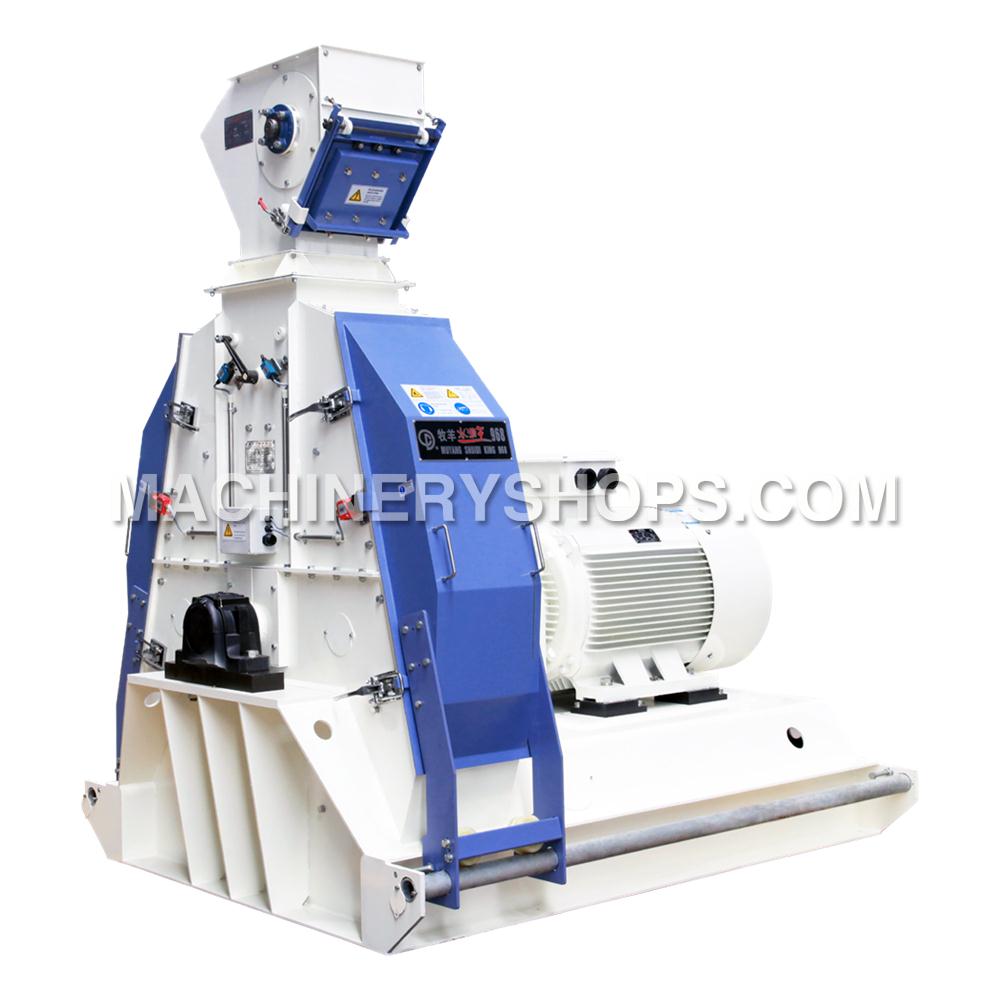
The SJHS2A Double-circle Mixing Machinery is widely used for mixing powdery and special granular materials in feed industry. Mixing machine is playing a vital role in feed production. It is fair to say that if proportioning system is disjoined from mixer, even with advanced manufacturing processes, the production will become meaningless. Therefore, the quality and performance of mixing machine directly influences survival and development of feed mills. Stable-performance equipment not only helps enterprises to keep making profits but also reduce large sum of money for maintenance and repairing.
(1) Feeding
Solid materials
The materials can be directly fed from the bin (see Fig.2-7 005) controlled by a lock gate (see Fig.2-7 006) after weighting with the proportion scales (see Fig. 2-7 001), and also can be fed via a covering equipment or via an operator (see Fig.2-3 003) at the manual dumping bit (see Fig.2-7 004).
Liquid (if necessary)
Liquid is generally fed into the mixing machine via the liquid addition system (see Fig. 2-7 010).
(2) Discharging
The mixtures conveyed from mixer (see Fig. 2-7 007) shall be collected by a surge bin (see Fig. 2-7 008);
And the volume of surge bin should be 1.5 times more than that of feed mixer. The surge bin usually has an access door (manhole) and a glass inspection window; the lower part shall have a lock gate or conveying equipment (see Fig. 2-7 009);
The upper end of air-return duct (see Fig. 2-7 009) is connected to the surge bin or that above the scale to ensure stably feeding. In addition, the surge bin shall be removable for maintainability; the environmental protection equipment can be equipped at the outlet to prevent dust pollution of the surge bin.
Sunday, March 15, 2015
Thursday, March 12, 2015
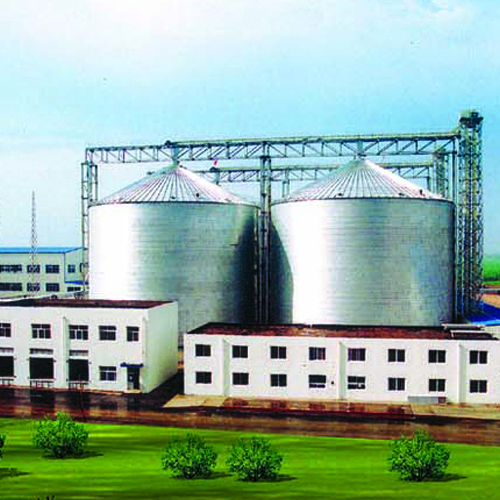
Assembly Type Steel Silo
Steel silos can be equipped with complete temperature control and ventilation system that guarantees the maintenance of the grain in good conditions, and it's not necessary to require the soil to be as firm in order to support the weight of the structure. Sometimes grain storage silo can be built on land that doesn't have the higher load-bearing capacity needed for concrete.
The assembly silo is made of high quality hot-galvanized steel plates which are rolled into corrugation and made into standard connecting holes. These plates are connected by high-strength screw bolts. The steel silo plates/thickness distribution is set according to equal strength theory which makes the silo plates bear average stress. The vertical friction is supported by the stiffeners. These stiffeners are evenly and vertically distributed in the silos. The connecting screw bolts are served with round galvanized steel washers and the connection holes are served with age-resistant and water-proof washers. The silo plates/interval is injected by water-proof daub belts that are for aviation special purpose. The grain silo is assisted with flat repairing doors, outside ladder, ladder guard rings.
Advantage of assembly type steel silo
***Large capacity
One single-silo capacity is up to 18,000 tons with comprehensive configurations to meet customers' different requirements.
***Good sealing performance
The silo is of a good sealing performance and can be used as a fumigating silo.
***Long service life
Best sheets match to silo body enables a normal service life up to 20-25 years.
***Detachable and movable
With standardized and modularized production, components and parts have a high standardization and good interchangeability, thus can be partially replaced or completely transferred.
Tuesday, March 10, 2015
Muyang "Chaole" SWFL82B Vertical Pulverizer
SWFL82B vertical ultra-fine pulverizer is a new type of equipment for large-, medium- and small-sized feed mill to process various coarse ground materials after preliminary cleaning, magnetic separation and mixing, such as corn, sorghum, rice, wheat, soybean meal, fish and shrimp, so as to obtain the materials in superfine particle size as required. It is especially suitable for micro-grinding or superfine-grinding of feeds for prawn, turtle, eel and young animals.
Features of the product
1. It is characterized by compact structure and small floor space.
2. It is a structure without any sieve, both grinding and grading are put in the same closed space, so that the grading can be finished one time and the energy loss due to over-grinding can be reduced.
3. With a pneumatic opening mechanism, the grinding chamber can be quickly opened and ease of maintenance.
4. The grading system on the grinding machinery is an optimized design with high grading efficiency.
5. The particle size is uniform and adjustable, and the temperature of materials is lower by means of aspiration and pneumatic conveying.
6. The ground particle size of 60-200 mesh is continuously adjustable, so t he special requirements of ultra-fine pulverizer can be fulfilled.
7. A special silencer is equipped, which can greatly reduce noise.
8. Particular anti-bridging feeding device can protect feeding materials from bridging.
9. It runs stably with little vibration.
10. It is provided with temperature and speed indicators which can trace the actual running status of the pulverizer.
Working conditions
1. The ultra-fine pulverizer should be installed in basement or on the ground floor with ambient temperature of -5℃~40 ℃.
2. The ultra-fine pulverizer should be technologically matched with former and back equipment.
3. The working voltage on the grinding machine should be stable with a deviation no more than ±5%.
4. The diameter of materials entering the pulverizer should not exceed 1mm, and the moisture content should not exceed 12%.
Thursday, March 5, 2015
Tips for Appearance Quality Control of Extruded Feed
The preference of good-looking products on the fiercely competing market had animal feed machines manufactures pay more attentions to the appearance quality of extruded feed pellets.
Muyang therefore in here offers some operational tips to help eliminate appearance problems and add value to feed extrusion productions, with the support of our experienced service technicians. The most common problems on the appearance of extruded feed are size difference, irregular shape, and poor pellet surface smoothness.
There are four conditions, under any of which pellets of non-uniform sizes will be produced:
1) Feed mash and water added into the conditioner cannot be evenly mixed with each other because water added into the conditioner is not sufficiently atomized. In this case, the water atomizing nozzle should be checked and cleaned thoroughly to make it free of any blockage.
2) Die holes blocked by large ground particles or foreign matters (usually are accumulated residues), especially when extruding small pellets. Production problems in this case are easy to be identified. The finished pellets usually are uniform at the beginning of production, but this performance cannot sustain for a long time and pellets in large size and small size generated. In this case, it has to stop the extruder to clean the die holes. In order to avoid die hole blockage, the ground particle size of raw material should not exceed 1/3 of the die hole.
3) Screw of the extruding machine is worn out and end of life. This situation can be identified through the clearance between chamber inner wall and screw flight profile. The normal clearance is 1.5mm-2.0mm. When it larger than 5mm, pellets in different sizes are produced. In this case, it is necessary to replace the worn screw with a new one.
4) Feed flow unevenly distributed to discharge at Venture tube because of severe wearing loss of the distributing cone. In this case, the distributing cone should be replaced with a new one.
Wednesday, March 4, 2015
Muyang Steel Storage Silo
With a nominal output of 45 tons per hour, the facility mainly produces φ3.5mm poultry feed. It is also flexibly designed to produce pellet feed for cattle or sheep. The scope of the project mainly includes:
***23,000 tons of corn storage in seven steel silos representing approximately two months consumption.
***A steel structure workhouse accommodating three 15T/H pelleting lines and a reserved thermal treatment line for powdery feed.
***A precise 50TPH proportioning system with 35 ingredient bins.
***All processing equipments ranging from raw material receiving to finish product bagging.
***1,000 tons of finished product storage in 18 bulk load-out bins with two 20TPH bagging lines available.
***Computer-controlled operation and management within the entire plant.
***Lighting system, communication system and monitoring system.
The latest Muyang machines and technologies, which are upgraded for energy-efficiency and stable running, are applied in this mill. Besides, based on its vast technical resources and expertise, Muyang designs many products and solutions that meet every particular need of SNA. The customized double-deck cooler, for instance, could reduce the waiting time for formulation change.
On the other hand, as a global integrated solution provider in feed industry, Muyang is specializing in the so called "One-stop" service. And its numerous resources are focused on the design, production, installation, commissioning, training, consultation and after service of steel storage silo, plant steel structure facilities, processing machines and plant automation, bringing more convenience, flexibility and simplicity.
Tuesday, March 3, 2015
Pick up Suitable Silo
Machineryshops.com from Muyang offers a range of suitable silos for the storage of free-flowing materials (grain) and mealy components (bruised grain). Whether indoor or outdoor storage, whether with or without hopper substructure: storage technology from Muyang stands for safety and reliability.
Steel storage silo capacities are at least 3000t, and whether small or large, you get a robust and innovative product. Your requirements are of utmost priority. Individual planning leads to reliable solutions which finally mean your success.
Features of Thermal Insulation Silo
1. Thermal insulation
Grain temperature change gradient inside silos is lower than that outside, thus not likely to have condensation of moisture.
2. Safe grain storage
Storing in a low temperature, increases the grain storage stability, keeps the grain quality and prolongs the safe-storage period
3. Low fabrication cost
With installing an insulation layer (polyurethane froth, rubber sponge, glass fiber etc.) on the outer wall ,insulation silo can have a low fabrication cost compared to concrete silo.
Features of assembly type steel silo
1. Large capacity
One single-silo capacity is up to 18,000 tons with comprehensive configurations to meet customers’ different requirements.
2. High accuracy
Complete advanced processing equipment and technology are introduced from USA to effectively ensure working accuracy and reduce damage to galvanized layer.
3. Less residues
External installable stiffeners contribute to less grain residues on silo walls.
4. Detachable and movable
With standardized and modularized production, components and parts have a high standardization and good interchangeability, thus can be partially replaced or completely transferred.
Monday, March 2, 2015
Advantages of Biomass Pellets
In general, final biomass pellets which is made biomass pellet machine is dry, hard, durable and after combustion. With low amounts of ash, we say the biomass pellet is high-quality pellet. Comparing to raw feedstock, properties of biomass Pellets which usually have some advantage than others. For example, biomass pellets made by biomass pellet machine can not only be easily handled or used in some important feed making systems, but also the biomass particles contains more energy.
Biomass pellets can be used to burn to provide energy which it is more attractive for use because of the combustion of sustainability and less pollution. The most common diameters of biological particle is generally 6-8 mm and maximum diameter is generally not more than 38 mm if diameters of biomass pellets are over 25 mm, we call them "briquettes" but rarely appear. Wood particles are the typical of biomass pellets.
Saturday, February 28, 2015
Muyang Business Scope
Muyang is an integrated solution provider of plants, equipment and services in the farm-to-table industry chain. Our global ability and experience in turnkey project delivery in the fields of feed milling, grain logistics and processing, steel structure building as well as industrial automation has helped our customers succeed in their respective markets.
As world's demand for quality and safety foods grows, food supply chains have become more connected. Most of our customers diversify their businesses and extent to upstream and downstream links in order to boost efficiency, safety and resource sustainability in operations.
To couple with customers' growth and aim to become a single-source supplier who shares knowledge, experience and resource, and provides convenient, flexible and consistent technical supports to customers and help them grow businesses, Muyang makes a strategic adjustment and reorganize its businesses around four major segments:
Feed Milling: animal feed/aquafeed/petfood/premix processing machines and plants
Animal Farming: animal houses, feeding systems, farm environmental systems
Food Processing: oil & fat processing, grain milling, steel storage silo, handling and drying
Others: biomass equipment, steel structure building, plant automation, robotic machines, spare parts
Thursday, October 30, 2014
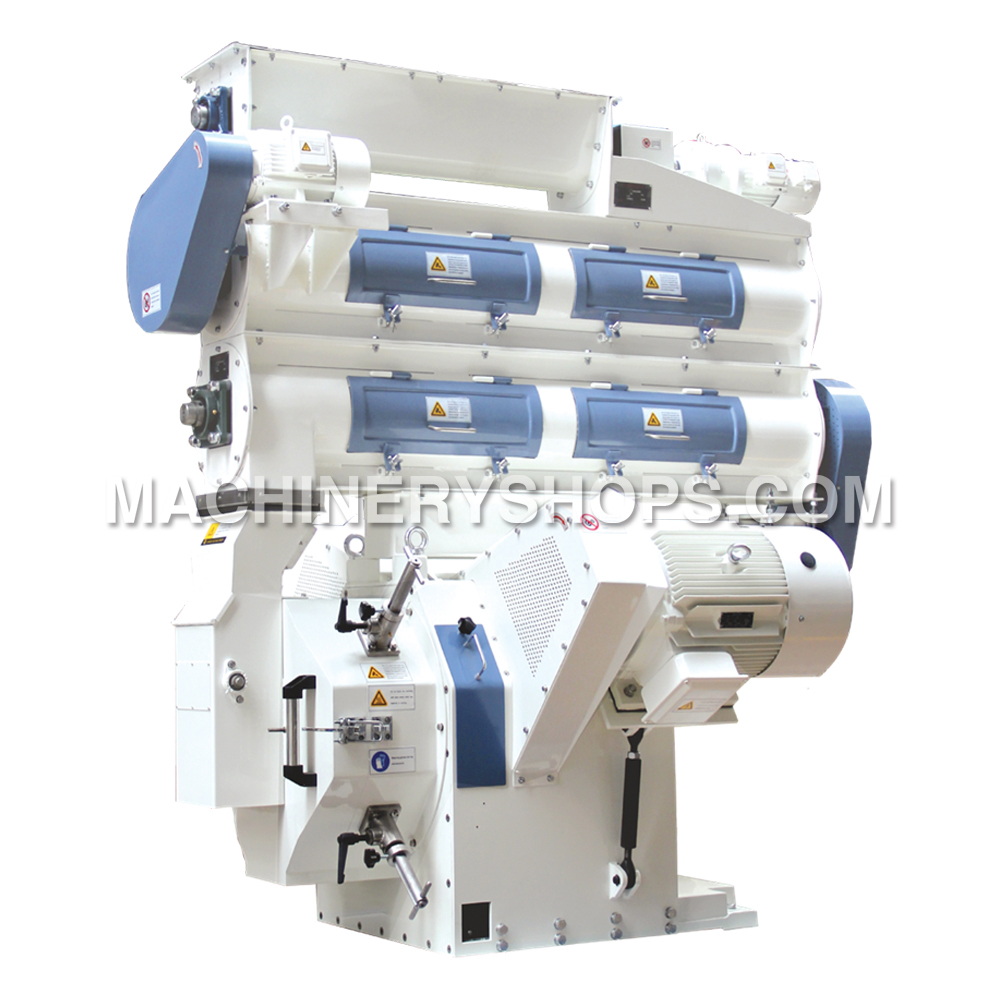
SZLH460×160 Type Pellet Mill
The pellet mill is directly driven by timing belt, which is characterized by its ideal drive ratio, great driving moment, smooth rotation, high throughput, low noise, easy operation and maintenance.
This type of pelleting machine can be fitted with many kinds of ring dies with φ1.5~φ12 die holes and different thickness, and the user can select based on self demand for achieving the optimum technical and economic efficiency.
This machine, characterized by its stable running performance, high throughput and high pellet forming ratio, is applicable for producing pellet feeds for livestock and poultry.
The adjustable speed control motor is adopted for feeding of this machine, and the machine is equipped with an overload protection device and an outside discharging mechanism, and the bypass gate can be opened automatically in case of overload of the main motor.
Different type of conditioners are optional as required, such as single-, double- and triple-pass conditioners as well as a double-shaft differential conditioner.
This pelleting machine is specially used for animal feed processing, generally for processing powdery, flowable and easily pelletized materials to produce pellet feeds for livestock and poultry.
Do not use it for processing food.
To ensure safety and efficiency, this machine shall be used in the areas with an altitude lower than 1000 m, a temperature from -5℃ to 40℃ and an air relative humidity from 30% to 95%.
If the area does not conform to above conditions, please indicate specially when ordering.
Friday, September 19, 2014
The Usage on Muyang TLMC12 Jet Filter Dust Collector
Dust concentration of dust-containing air, relative humidity, physical and chemical characters of dust such as dust size, density, adhesivity and explosive repose angle shall be known after determining to use the filtering sleeve dust collector.
Consider the filtering air speed and filtering area when selecting a dust collector. The designed filtering air speed of full series dust collectors shall be not more than 4 m/min. The filtering air speed is determined by dust characteristics and density, usually the middle/lower limit is selected; as for light and small dust particles, the filtering air speed shall be much lower, or even less than 2 m/min; the lower the filtering air speed, the higher the dust removal efficiency, however, the cost will be increased; therefore, it is important to select the filtering air speed applicable for the character of dust to obtain a better performance-price ratio. Determine the filtering area based on volume of air to be treated after determining the filtering air speed; see Table 1 for corresponding parameters to select correct dust collector model.
Normally, the feed machine is used for treating dust-containing air with a dust particle size more than 1μm; for treating dust-containing air with a dust particle size less than 1μm, please inform us when ordering, so that we can select other filter material and guide you to adjust the corresponding working parameters.
Please inform us when ordering if the dust collector will be used for central dust collecting and pneumatic conveying and the air pressure exceeds 15000Pa, so that we can adjust the corresponding structure.
It is recommended to select a dust collector with larger size or equip an additional pre-purifier when the dust concentration at the entry of the dust collector is more than 15g/m3.
Please inform us if you have any special requirements to the dust collector or you have any other ideas.
In addition, we have other feed machinery available here, you can contact anytime.
Tuesday, August 26, 2014
Hammer Tip: Go High Speed to Control Particle Size
In most cases, feed manufacturers primarily rate a hammermill's performance on its capacity to grind a certain amount of material in a given time. However, this practice ignores particle size, an important consideration in handling characteristics, pellet durability and animal performance. Traditionally, feed manufacturers who use hammermills to grind grains and other materials control particle size by changing the size of the hammermill screen holes. While screen size has a major influence on particle size, hammer tip speed is also an important factor. Generally, if all other factors are the same, hammermills with higher hammer tip speeds produce a finer grind than those with lower tip speeds.
To understand how tip speed affects particle size, it is important to know how a feed machine operates.
A hammermill grinds by two distinct forces. The first force is impact. As the grain drops into the grinding chamber, it is struck by fast moving hammers and accelerated toward the screen where a second impact occurs.
The particles that don't discharge through the screen immediately form a fluidized bed against the inside of the screen where they are ground by attrition, the second grinding force. With attrition, particles are ground as they are forced against the screen and against each other. Of the two grinding forces, impact is more efficient. Feed machinery manufacturers, therefore, have gone to great lengths to increase the amount of impact that occurs in the hammermill, resulting in steady improvements in grinding efficiency.
One way to increase the amount of impact between hammer and particle is to increase the tip speed of the hammers.
According to basic principles of physics, if motor speed is fixed, increasing the diameter of the rotor will increase the speed of the hammer tip.
Special design and material modifications are required to produce a machine that operates safely at rotation speeds of more than 25,000 feet per minute. The rotor shaft and plates are manufactured from materials that withstand tremendous forces. The assembly is balanced to prevent excessive vibration. Engineers and designers must also give consideration to the bearing mounts, hammermill base and frame to maintain proper alignment and support for the heavy rotor assembly. A hammermill with a higher tip speed will produce a finer grind than one with a slower tip speed, provided the two grinders have the same size screen. If a high-speed hammermill is equipped with a larger hole screen, ground material particle size will be the same for both machines.
Wednesday, August 20, 2014
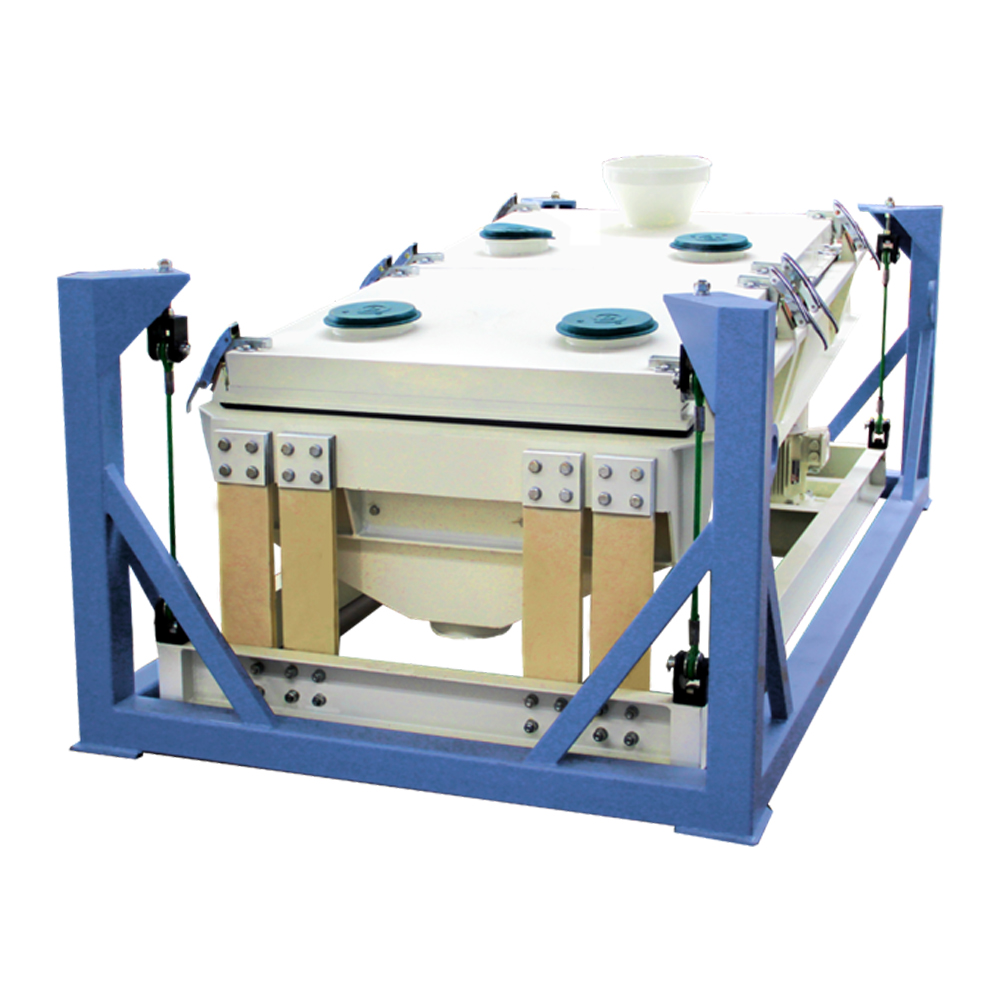
Installation of the Sifter
There are two ways to install Muyang SFJH series Rota-shake Sifters: support base type and suspension type. For support base type installation, the stander of the sifter is directly installed on foundation throught anchor bolts, while suspension type installation is without stander and hanging mechanism, the carrier of the sifter can be directly suspended on the roof of the factory building throught wire ropes; however, there are certain requirements to the installation site and the factory building.
This feed machine leaves the factory as a whole and usually applies support base type installation. Before installation, check against the dimensions in the sample diagram of equipment for enough space, especially the space for operation, maintenance and accessory replacement. To ensure the stability of stationariness, installation site of the sifter shall be solid and horizontal. Meanwhile, material weight in the sifter shall be considered in calculation. The base of sifter shall be connected with the foundation through anchor bolts tightly to prevent the sifter from offset during running.
If suspension installation is applied, it is suggested to assemble the four wire ropes with turnbuckles so as to level the carrier of the sifter. Meanwhile, protection device must be used to protect the sifter when any of the wire ropes is broken.
Friday, August 8, 2014
SYPZ Type Vacuum Coating System
SYPZ type vacuum coating system is arranged behind pelleting and extruding, and suitable for pellets to be coated with the liquids in large proportion like oil, enzyme preparation, vitamin, antioxidant and amino acid etc. It is also applicable for the pellets with high density, of which the coating rate is low but the coating effect is not good for common pellet surface.
A vacuum liquid coater of the SYPZ series is automatically controlled by a computer with a few operating parameters. It is only necessary to input the output-to-oil ratio, the system will run automatically, so the operation is very convenient. The coater features high accuracy of coating proportion and capacity, and with excellent coating evenness. And the feed machine is characterized by its favorable vacuum degree and vacuum retention.
The sprayed liquid will be fully absorbed under the vacuum condition.
The spraying ratio can reach more than 35 percent.
The spraying accuracy can reach 3 millesimal.
With automatic control system, easy to operate and maintain.
Widely used for spraying the liquid and oil to the extrusion feed and pellet feed.
Wednesday, July 30, 2014
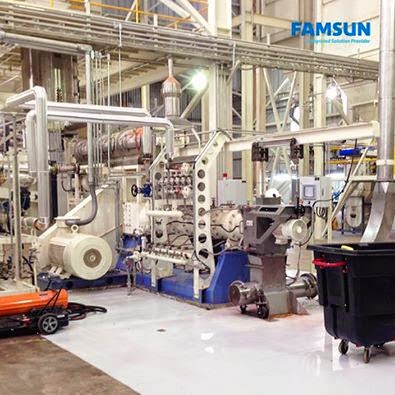
FAMSUN Dry Petfoods Factory Project
--Helping pets live longer, healthier lives through sound nutrition
The trends of humanization of pets, however, has put the flavor, color and shape of petfoods even the aesthetic quality of package in the most important position of pet owner's consumption decision. To be competitive in the high-end market, petfood manufacturer must make its products distinguished.
As a professional and experienced technical supplier, FAMSUN is well prepared to work with pet feed machinery manufacturers to developed their own high-value, nutritional, attractive petfood products. FAMSUN innovative extrusion system and post treatment processes, state-of-the-art processing techniques, as well as customized solutions enable customers to produce various high-end competitive products their own.
Friday, July 25, 2014
Pelletizing Process on Pellet Mill
Startup a new pellet mill or a pellet mill with a new ring die according to following steps:
1) Open the bypass gate;
2) Startup the main motors of the pellet mill. The motor shall be started up in Y firstly, and runs in delta connection while under normal operation speed;
3) Feed a certain amount of oily coarse mash to the inlet of the feed machine manually, and continue feeding until pellet is formed. This is the primary lubrication for the ring die before normal production;
Oil bearing material: generally, feed mash with ≥10% oil content. The raw materials of rice bran, expanding soybean and others can also used as oil bearing material. As for bad quality ring die with rough hole wall, about 15% spun yarn passing through 40 mesh screen can be added in oil bearing material for rinsing and grinding the die (generally persist for more than 30 minutes), otherwise, the materials cannot be discharged.
4) Startup the conditioner motor;
5) Startup the feeder motor, adjust the frequency converter to a low frequency (generally about 5Hz) and allow the feed to enter the conditioner slowly, Do not add any steam at the beginning of pelletizing, close the bypass gate and slowly quicken the feeding speed based on the current of the main motor;
6) Open the steam valve a bit, then increase the feeding amount when the ammeter’s pointer is falling; when the ammeter’s pointer of the main motor reaches the normal load, add steam amount to allow the ammeter’s pointer to fall back. Repeat again and again until the maximum output and the best quality of pellet are obtained under the rated load;
7) A schematic diagram of pellet extrusion is shown in Fig 4.1. The feeding amount and steam supply are different upon the types of ring die and formulas, and the pellet quality varies as well. So the operator shall be rich in operating experience.
Thursday, July 17, 2014
Muyang Biomass Engineering: Wood and woody residues
***Muyang Biomass Engineering: Wood and woody residues***
--Making a substantial contribution to global energy security
Woody biomass from forests remains the largest biomass energy source today. Examples include trees, trees removals, prunnings, stumps, yard clippings, and wood manufacturing residues such as sawdust, bark, culled wood, etc. Made from renewable forest byproducts and of high heating value, wood pellets provide a renewable, sustainable fuel source for energy industry to enjoy.
Wednesday, July 9, 2014
Muyang Steel Silo---Supportive along the grain value chain
We offer products and complete solutions in the field of grain handling, cleaning, drying and storage for agribusiness section. There are now over 1000 Muyang steel silo projects standing around the world and making their efforts to the global food security, from grain collection points to grain elevators, from inland/water terminals to processing plants such as feed mills, rice mills, flour mills, breweries, oilseed processing factories, etc.
The key products and systems include:
1.Assembly type steel silos: 1~18,000 t/silo; Spiral steel silos,1-8,000 t/silo;
2.Material handling system: bucket elevators, conveyors, sweepers, spreaders, etc.;
3.Conditioning and drying systems: cleaners, dust collectors, dumping systems, dryers, fans, controls, etc.
Tuesday, June 24, 2014
Muyang Grinder Machine
The machine is developed with the method of mixed powder jerring,which is widely applied for the mate ria grnding for the trades of pharmaceutics chemical and foodstuff etc.
The feed machine has a simple structure and is easy to be installed and dismantled and cleaned,with the featu res of stable running,convenient moving low noise and high grinding effi-ciency.etc.
The machine is a high speed running one The target material is smashed by the cutting and rinding of high-speed knives,of which the figure and size of knives can be selected in accordance with different materials and the size of granules can be acqui red by changing of the screen and regulating the soeed.
Thursday, June 19, 2014
Four Sizes Produced by Extruder Machine
There are four conditions, under any of which pellets of non-uniform sizes will be produced:
1) Feed mash and water added into the conditioner cannot be evenly mixed with each other because water added into the conditioner is not sufficiently atomized. In this case, the water atomizing nozzle should be checked and cleaned thoroughly to make it free of any blockage.
2) Die holes blocked by large ground particles or foreign matters (usually are accumulated residues), especially when extruding small pellets. Production problems in this case are easy to be identified. The finished pellets usually are uniform at the beginning of production, but this performance cannot sustain for a long time and pellets in large size and small size generated. In this case, it has to stop the feed machine to clean the die holes. In order to avoid die hole blockage, the ground particle size of raw material should not exceed 1/3 of the die hole.
3) Screw is worn out and end of life. This situation can be identified through the clearance between chamber inner wall and screw flight profile. The normal clearance is 1.5mm-2.0mm. When it larger than 5mm, pellets in different sizes are produced. In this case, it is necessary to replace the worn screw with a new one.
4) Feed flow unevenly distributed to discharge at Venture tube because of severe wearing loss of the distributing cone. In this case, the distributing cone should be replaced with a new one.
Thursday, June 12, 2014
Muyang Introduced a New Grain Drying Storage System
Recently, Muyang developed and produced grain drying equipments drawing on seasonal characteristics in different regions of the South and the North's grain harvest.
Its use of simulation design and CNC machining tools, set intelligent control technology, variable temperature drying process, Francis and shun reflux, positive and negative, continuous and cyclic drying technologies combine in one, effectively ensure the whole grain drying automated process, low energy consumption, improve the quality of grain drying, to reduce the loss of grain postpartum, energy conservation, technology reached the international advanced level.
Meanwhile, Muyang adopted steel instead of traditional concrete in grain storage silo. Because the silo is clean, and its good sealing can avoid rodents, effectively reducing the proportion of losses during storage of up to 5%.
Currently, Muyang grain drying and storage system have been in the major grain-producing provinces such as Anhui, Jiangsu, Hubei, northeast provinces and other places to establish a demonstration line, after using the system to meet the needs, easy operation, high level of intelligence, low energy consumption, high combustion efficiency of new heat source, and the remaining heat recovery saves energy, food quality and good after drying, become suitable for food production in the status quo of China's low-carbon smart shelf impairment drying and storage equipment.
President Fan of Muyang introduced that grain drying and storage projects as planned popularize annually 2.7 million tons of grain drying; there is no reasonable food store, it will have at least 5% loss, loss of 135,000 tons of grain per year; drying reasonable scientific handling and storage, representing an increase of 135,000 tons of grain annually. 2020, a year due to increased drying and storage devices can be increased 3.78 million tons of grain.
Muyang now has cooprations with a number of economies in the Asia-Pacific international cooperation in grain cultivation, logistics, processing and other aspects of development of agricultural science and technology cooperation, high-tech and export of agricultural products.
Subscribe to:
Posts (Atom)