In most cases, feed manufacturers primarily rate a hammermill's performance on its capacity to grind a certain amount of material in a given time. However, this practice ignores particle size, an important consideration in handling characteristics, pellet durability and animal performance. Traditionally, feed manufacturers who use hammermills to grind grains and other materials control particle size by changing the size of the hammermill screen holes. While screen size has a major influence on particle size, hammer tip speed is also an important factor. Generally, if all other factors are the same, hammermills with higher hammer tip speeds produce a finer grind than those with lower tip speeds.
To understand how tip speed affects particle size, it is important to know how a feed machine operates.
A hammermill grinds by two distinct forces. The first force is impact. As the grain drops into the grinding chamber, it is struck by fast moving hammers and accelerated toward the screen where a second impact occurs.
The particles that don't discharge through the screen immediately form a fluidized bed against the inside of the screen where they are ground by attrition, the second grinding force. With attrition, particles are ground as they are forced against the screen and against each other. Of the two grinding forces, impact is more efficient. Feed machinery manufacturers, therefore, have gone to great lengths to increase the amount of impact that occurs in the hammermill, resulting in steady improvements in grinding efficiency.
One way to increase the amount of impact between hammer and particle is to increase the tip speed of the hammers.
According to basic principles of physics, if motor speed is fixed, increasing the diameter of the rotor will increase the speed of the hammer tip.
Special design and material modifications are required to produce a machine that operates safely at rotation speeds of more than 25,000 feet per minute. The rotor shaft and plates are manufactured from materials that withstand tremendous forces. The assembly is balanced to prevent excessive vibration. Engineers and designers must also give consideration to the bearing mounts, hammermill base and frame to maintain proper alignment and support for the heavy rotor assembly. A hammermill with a higher tip speed will produce a finer grind than one with a slower tip speed, provided the two grinders have the same size screen. If a high-speed hammermill is equipped with a larger hole screen, ground material particle size will be the same for both machines.
Tuesday, August 26, 2014

Wednesday, August 20, 2014
Installation of the Sifter
There are two ways to install Muyang SFJH series Rota-shake Sifters: support base type and suspension type. For support base type installation, the stander of the sifter is directly installed on foundation throught anchor bolts, while suspension type installation is without stander and hanging mechanism, the carrier of the sifter can be directly suspended on the roof of the factory building throught wire ropes; however, there are certain requirements to the installation site and the factory building.

This feed machine leaves the factory as a whole and usually applies support base type installation. Before installation, check against the dimensions in the sample diagram of equipment for enough space, especially the space for operation, maintenance and accessory replacement. To ensure the stability of stationariness, installation site of the sifter shall be solid and horizontal. Meanwhile, material weight in the sifter shall be considered in calculation. The base of sifter shall be connected with the foundation through anchor bolts tightly to prevent the sifter from offset during running.
If suspension installation is applied, it is suggested to assemble the four wire ropes with turnbuckles so as to level the carrier of the sifter. Meanwhile, protection device must be used to protect the sifter when any of the wire ropes is broken.
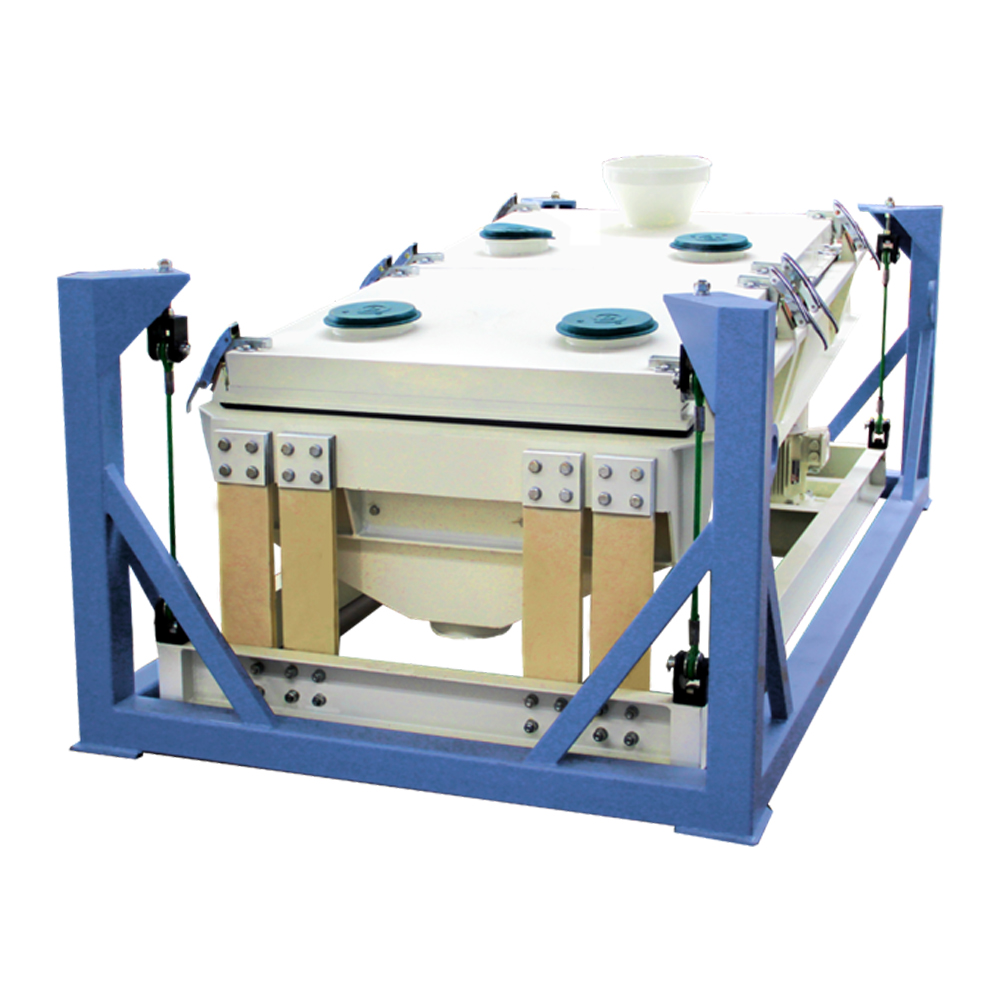
This feed machine leaves the factory as a whole and usually applies support base type installation. Before installation, check against the dimensions in the sample diagram of equipment for enough space, especially the space for operation, maintenance and accessory replacement. To ensure the stability of stationariness, installation site of the sifter shall be solid and horizontal. Meanwhile, material weight in the sifter shall be considered in calculation. The base of sifter shall be connected with the foundation through anchor bolts tightly to prevent the sifter from offset during running.
If suspension installation is applied, it is suggested to assemble the four wire ropes with turnbuckles so as to level the carrier of the sifter. Meanwhile, protection device must be used to protect the sifter when any of the wire ropes is broken.
Friday, August 8, 2014
SYPZ Type Vacuum Coating System
SYPZ type vacuum coating system is arranged behind pelleting and extruding, and suitable for pellets to be coated with the liquids in large proportion like oil, enzyme preparation, vitamin, antioxidant and amino acid etc. It is also applicable for the pellets with high density, of which the coating rate is low but the coating effect is not good for common pellet surface.

A vacuum liquid coater of the SYPZ series is automatically controlled by a computer with a few operating parameters. It is only necessary to input the output-to-oil ratio, the system will run automatically, so the operation is very convenient. The coater features high accuracy of coating proportion and capacity, and with excellent coating evenness. And the feed machine is characterized by its favorable vacuum degree and vacuum retention.
The sprayed liquid will be fully absorbed under the vacuum condition.
The spraying ratio can reach more than 35 percent.
The spraying accuracy can reach 3 millesimal.
With automatic control system, easy to operate and maintain.
Widely used for spraying the liquid and oil to the extrusion feed and pellet feed.
Wednesday, July 30, 2014
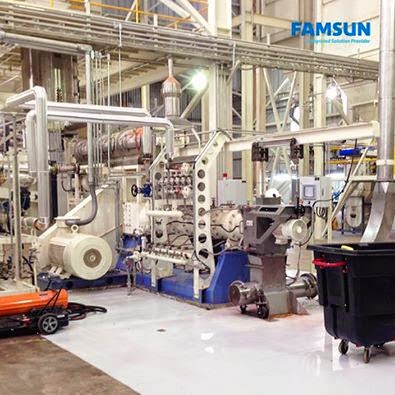
FAMSUN Dry Petfoods Factory Project
FAMSUN Dry Petfoods Factory Project
--Helping pets live longer, healthier lives through sound nutrition
The trends of humanization of pets, however, has put the flavor, color and shape of petfoods even the aesthetic quality of package in the most important position of pet owner's consumption decision. To be competitive in the high-end market, petfood manufacturer must make its products distinguished.
Friday, July 25, 2014
Pelletizing Process on Pellet Mill
Startup a new pellet mill or a pellet mill with a new ring die according to following steps:
1) Open the bypass gate;
2) Startup the main motors of the pellet mill. The motor shall be started up in Y firstly, and runs in delta connection while under normal operation speed;
3) Feed a certain amount of oily coarse mash to the inlet of the feed machine manually, and continue feeding until pellet is formed. This is the primary lubrication for the ring die before normal production;
Oil bearing material: generally, feed mash with ≥10% oil content. The raw materials of rice bran, expanding soybean and others can also used as oil bearing material. As for bad quality ring die with rough hole wall, about 15% spun yarn passing through 40 mesh screen can be added in oil bearing material for rinsing and grinding the die (generally persist for more than 30 minutes), otherwise, the materials cannot be discharged.
4) Startup the conditioner motor;
5) Startup the feeder motor, adjust the frequency converter to a low frequency (generally about 5Hz) and allow the feed to enter the conditioner slowly, Do not add any steam at the beginning of pelletizing, close the bypass gate and slowly quicken the feeding speed based on the current of the main motor;
6) Open the steam valve a bit, then increase the feeding amount when the ammeter’s pointer is falling; when the ammeter’s pointer of the main motor reaches the normal load, add steam amount to allow the ammeter’s pointer to fall back. Repeat again and again until the maximum output and the best quality of pellet are obtained under the rated load;
7) A schematic diagram of pellet extrusion is shown in Fig 4.1. The feeding amount and steam supply are different upon the types of ring die and formulas, and the pellet quality varies as well. So the operator shall be rich in operating experience.
Thursday, July 17, 2014
Muyang Biomass Engineering: Wood and woody residues
***Muyang Biomass Engineering: Wood and woody residues***
--Making a substantial contribution to global energy security

Woody biomass from forests remains the largest biomass energy source today. Examples include trees, trees removals, prunnings, stumps, yard clippings, and wood manufacturing residues such as sawdust, bark, culled wood, etc. Made from renewable forest byproducts and of high heating value, wood pellets provide a renewable, sustainable fuel source for energy industry to enjoy.
--Making a substantial contribution to global energy security
Woody biomass from forests remains the largest biomass energy source today. Examples include trees, trees removals, prunnings, stumps, yard clippings, and wood manufacturing residues such as sawdust, bark, culled wood, etc. Made from renewable forest byproducts and of high heating value, wood pellets provide a renewable, sustainable fuel source for energy industry to enjoy.
Wednesday, July 9, 2014
Muyang Steel Silo---Supportive along the grain value chain
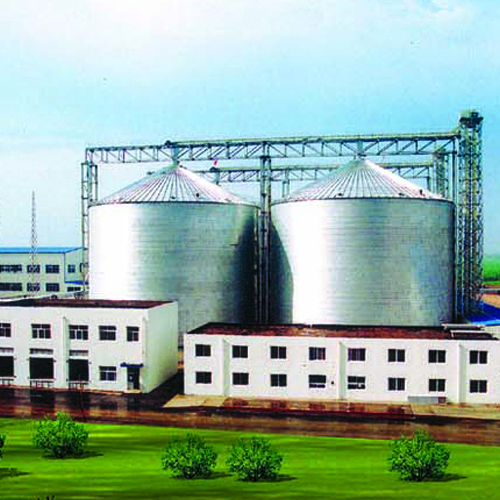
We offer products and complete solutions in the field of grain handling, cleaning, drying and storage for agribusiness section. There are now over 1000 Muyang steel silo projects standing around the world and making their efforts to the global food security, from grain collection points to grain elevators, from inland/water terminals to processing plants such as feed mills, rice mills, flour mills, breweries, oilseed processing factories, etc.

The key products and systems include:
1.Assembly type steel silos: 1~18,000 t/silo; Spiral steel silos,1-8,000 t/silo;
2.Material handling system: bucket elevators, conveyors, sweepers, spreaders, etc.;
3.Conditioning and drying systems: cleaners, dust collectors, dumping systems, dryers, fans, controls, etc.
The key products and systems include:
1.Assembly type steel silos: 1~18,000 t/silo; Spiral steel silos,1-8,000 t/silo;
2.Material handling system: bucket elevators, conveyors, sweepers, spreaders, etc.;
3.Conditioning and drying systems: cleaners, dust collectors, dumping systems, dryers, fans, controls, etc.
Subscribe to:
Posts (Atom)